web.dev
Design referenceA reference for a technical publication organized around practical topics.
Business work
Create a practical technical article whose claims can be traced to research and real evidence.
An original article draft with source-linked claims, a useful reader task, and a transparent review checklist.
Choose your AI tool, describe your task, and copy one complete project brief. Your inputs stay in this tab.
Includes your prompt, selected references, skill instructions, setup steps, and checks. Use your own AI account; Pristren does not run a model here.
Describe your project or task to prepare your brief.
Draft a useful product article for [Describe the project, audience, and useful result.] under Use existing project conventions. State assumptions and verify the result..

Define the reader’s task and the specific question the article should answer. Review the supplied research and current primary sources. Build a compact claim ledger with source URLs, review dates, and any testing evidence. Identify gaps before turning research into confident prose. Disclose any relevant commercial relationship according to the publication’s standards.

Write an original article organized around the reader’s job: context, relevant choices, concrete setup or method, expected result, common failure cases, and practical limitations. Link important claims directly to their evidence. Quote sparingly and explain the material in original language. Do not present vendor claims as independent verification or fabricate screenshots, benchmarks, commands, or hands-on experience.

Check every command against the relevant tool/version documentation. Clearly distinguish illustrative examples, documentation-reviewed compatibility, and actual observed tests. Remove unsupported superlatives and stale pricing claims. Return an unpublished draft, a source ledger, and unresolved review questions. Keep publication and outreach outside this drafting task unless explicitly authorized.

Execution environment: Codex. Follow applicable project instructions and verify the requested result.

Workflow
https://pristren.com/workflows/write-sourced-product-article/

Expected result
An original article draft with source-linked claims, a useful reader task, and a transparent review checklist.

Before you begin
- A defined reader, problem, and original angle.
- A source packet with current official documentation.
- A clear record of any actual testing and any commercial relationship.

Setup for Codex
- Start Codex in the repository and read applicable AGENTS.md guidance. Include only the files this task needs.
- Outline a useful reader task before writing, and distinguish documented instructions from observed results.
- Use the acceptance checks below to assess the result; an agent completion message is not evidence that the task passed.

Visual references
Study these as design references. Create an original design; do not copy branding, assets, or an entire layout.
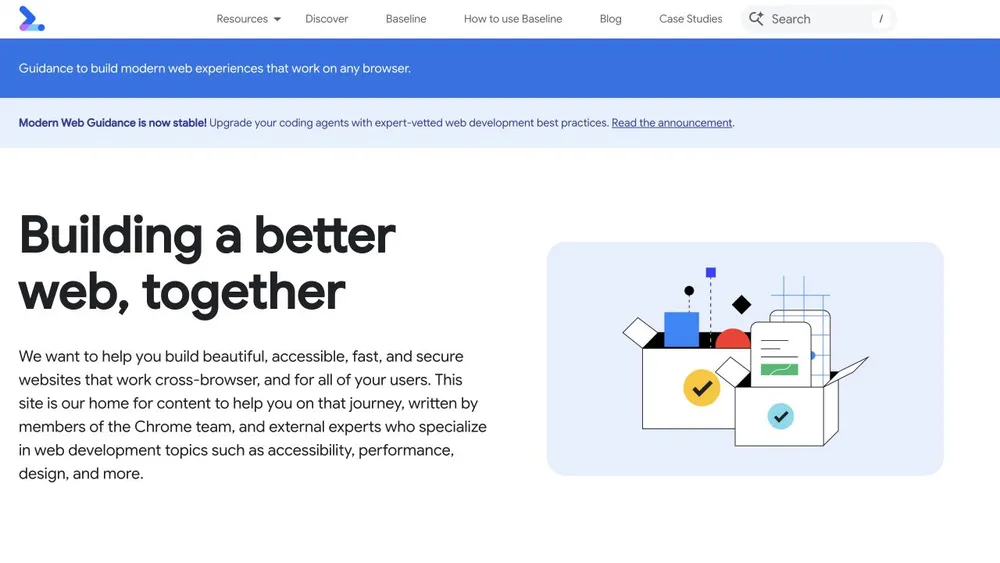
- web.dev: https://web.dev/
  Readable headings and summaries help readers explore or find one answer.
  Link explanations to practical workflows without interrupting the article itself.
- Ghost: https://ghost.org/
  Make the resulting publications and newsletters visible.
  Give different audiences clear routes while protecting the quality of the reading experience.

Selected resources
- Turn product research into a useful article — master prompt: https://pristren.com/resources/write-sourced-product-article-prompt/
  Use the task-specific master prompt above.
- Build reports from evidence: https://pristren.com/resources/evidence-led-report/
  Use the published resource’s Download SKILL.md action, or copy its complete original SKILL.md text. Draft resources are not publicly downloadable.
  Save the supplied SKILL.md as .agents/skills/evidence-led-report/SKILL.md in the project. Review it before use.
  Open the project in your tool and select evidence-led-report by name; check that it resolves to this project-local version.
  Read the resource below and apply only the parts relevant to the current task.
  Inspect the loaded skill before using it on a representative task. This page documents setup; it has not performed the installation for you.
  mkdir -p .agents/skills/evidence-led-report

Skill instructions (Build reports from evidence)
---
name: evidence-led-report
description: Produce a sourced research or business report from supplied data while keeping observations, calculations, and recommendations distinct.
---

# Evidence-led report

Define the question, audience, time range, and unit of analysis before drawing conclusions. Identify the source of each input and whether it is current enough for the question. Ask only for missing information that would materially change the result.

Keep a working evidence record: source URL or artifact, checked date, claim supported, scope or plan qualifier, and uncertainty. Missing documentation means unverified; it does not establish that a capability is absent. A vendor claim is not a hands-on benchmark.

For calculations, state units, denominators, exclusions, and transformations. Check that totals reconcile and distinguish zero from missing values. Do not turn views into unique people, a download into a successful implementation, or an enquiry into a paying client.

Write the report around the answer and the evidence needed to assess it. Separate observed facts, interpretations, and proposed actions. Cite close to the supported statement. Include material limitations and make recommendations proportional to the evidence.

For a repeatable report, describe the expected inputs and validation checks so a later run can reject stale or malformed data. Drafting a report does not authorize sending it, publishing it, or modifying the source system.


Execution
1. Define the reader task and outline the article’s practical answer.
2. Assemble a claim ledger with current sources and actual test evidence.
3. Draft original explanations and clearly labelled examples.
4. Audit claims, commands, disclosures, links, and unresolved questions before publication review.

Acceptance checks
- The article solves a concrete reader problem.
- Important claims link to evidence and preserve relevant qualifications.
- Documented guidance and actual tests are distinguished.
- The output remains an unpublished draft with an explicit review list.

If something fails
- The draft repeats the product’s marketing page: Return to the reader’s task and add decision criteria, concrete method, and sourced limitations.
- A command has not been verified: Check its official versioned instructions or label the gap and omit the executable command.

Inspect the project first. Report the changes, the checks actually run, and anything still unresolved. Ask before any deployment or external publication.
These source links and design notes travel with your brief. Keep only the references that fit your project.
Tool setup checked against official documentation. Pristren has not executed this workflow through this tool.
Required resources are included. Add optional ones when your task needs them.
Required
Start with this workflow’s original task-specific master prompt.
Review instructionsOptional
Retrieve official OpenAI documentation when the article concerns that ecosystem.
Review instructionsReturn to the reader’s task and add decision criteria, concrete method, and sourced limitations.
Check its official versioned instructions or label the gap and omit the executable command.
Try the brief in your AI tool first. Your feedback helps us find workflows that need attention.