AI Cost & Efficiency
Fewer tokens, cheaper APIs, local alternatives with real numbers
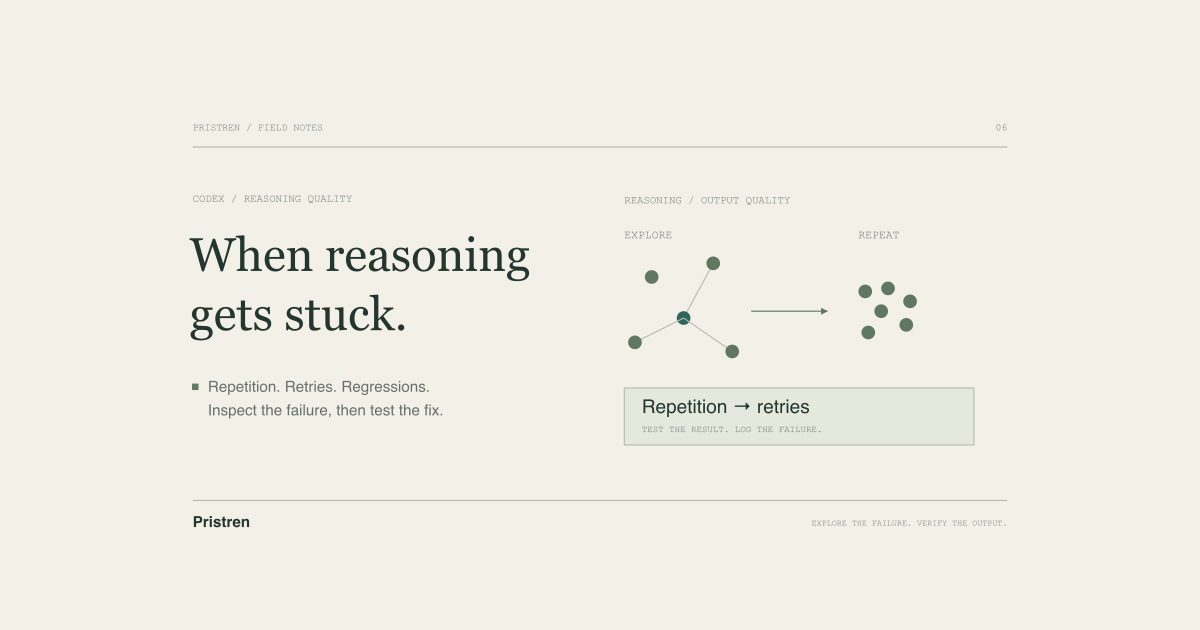
What is GPT-5.5 Codex reasoning-token clustering may be leading to degraded performance? A Practical Overview
Recent reports on GitHub suggest GPT-5.5 Codex's reasoning-token clustering causes degraded code quality. This post explains the mechanism, shows concrete examples, and offers practical mitigations.
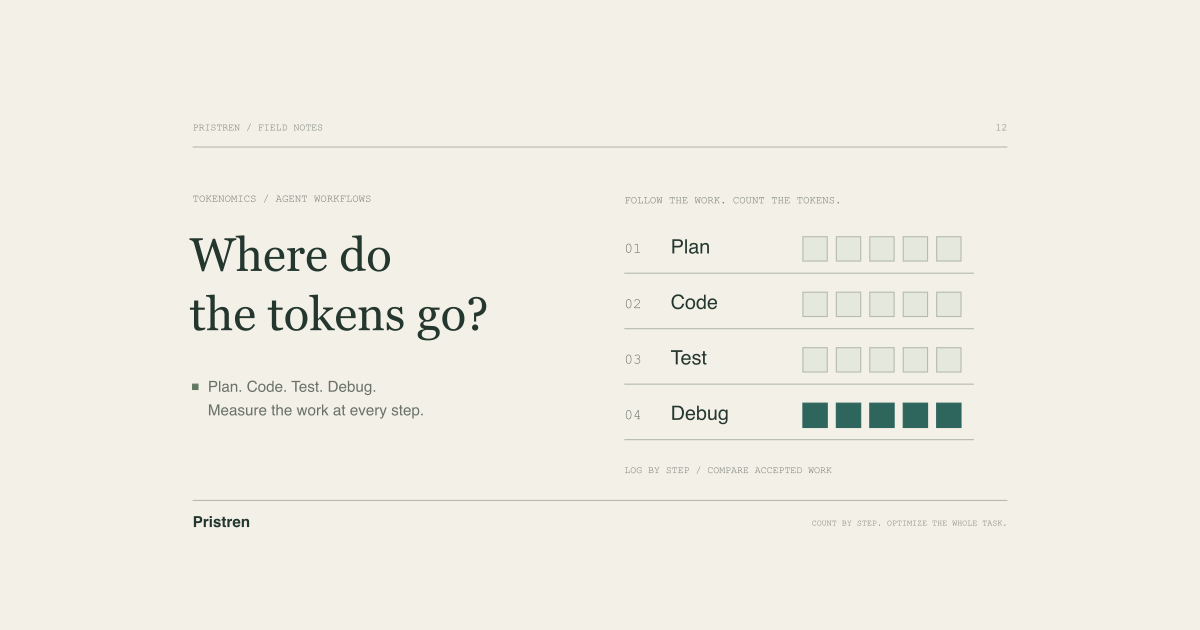
Tokenomics: Quantifying Where Tokens Are Used in Agentic Software Engineering
Tokenomics quantifies token usage per step in agentic software engineering. This post breaks down the numbers, tradeoffs, and practical tips for cost optimization.
Why Does MCP Use So Many Tokens? (And How to Fix It)
MCP tool definitions can eat half your context window before you prompt. Here is why — and six fixes that actually work in Claude Code and Cursor.

Slashing LLM Token Costs with Prompt Caching and Model Routing
Slash LLM API costs by up to 90% using prompt caching, semantic model routing, and context hygiene. Real architectural benchmarks with dollar savings math.
Prompt Caching: How to Cut Your LLM API Bills by 50%
Understanding how provider-side prompt caching caches system instructions and history files to drop latency and input token pricing.

Building a Custom LLM Gateway for Rate-Limiting, Fallbacks, and Auditing
How to engineer a centralized routing layer that handles API keys, logs usage, automatically retries on rate limits, and falls back to backup models.

Helicone: Track LLM Costs, Cache Responses, and Rate-Limit Users
Helicone sits between your app and LLM APIs as a one-line proxy - giving you per-user cost attribution, response caching, and rate limiting without changing your application logic.

Distilling Frontier LLMs into Lightweight Models for Production
A practical engineering guide to LLM model distillation, transferring reasoning from frontier models into lightweight, sub-8B models for production.
Optimizing Context Window Usage: Context Pruning and Summarization Techniques
Avoid pay-per-token overheads. Learn algorithms for summarizing historical messages and pruning irrelevant tokens from input payloads.

LLM Rate Limiting and Cost Controls: How to Prevent Runaway API Bills
Runaway LLM bills happen without rate limits and budget alerts. Here is how to implement per-user limits, global budget controls, and circuit breakers that protect your margins.

How to Reduce LLM Output Tokens by 40-60% Without Losing Quality
Output tokens cost 3-6x more than input tokens. Specific prompt instructions and format choices can cut output length by 40-60% for the same information, with a direct impact on your bill.

Quantization Explained: How to Run LLMs 4x Cheaper With Minimal Quality Loss
Quantization reduces model weight precision from FP32 to INT4, cutting memory and compute by 4-8x. Q4_K_M is the sweet spot for most use cases - near full quality at a fraction of the size.

Semantic Caching: How to Serve LLM Responses Without Calling the API
Semantic caching stores LLM responses and returns them when a new query is semantically similar to a cached one. In customer support applications, hit rates of 15-40% are realistic.

The Cost-Per-Task Framework: How to Actually Measure AI ROI
Tracking API spend alone tells you nothing about ROI. The right metric is cost per meaningful task - and comparing it to the non-AI cost of doing the same work.

Model Routing: How to Cut LLM Costs 50-70% Without Sacrificing Quality
Model routing automatically sends simple queries to cheap models and complex ones to expensive models. With GPT-4o-mini at $0.15/1M tokens vs GPT-4o at $2.50/1M, the savings are substantial.

How Much to Budget for LLM API Costs at Each Startup Stage
LLM costs scale from $0-50/month at pre-product to $500-5,000/month at growth stage. Here is what to expect, where to optimize, and the rule of thumb that keeps AI spend sustainable.

Groq vs. Together AI vs. Fireworks AI: Fast LLM Inference Compared
Three fast, cheap inference platforms for open source LLMs. Groq is the fastest, Together AI has the broadest model selection, Fireworks specializes in production-grade function calling.

Prompt Caching With Anthropic and OpenAI: How to Cut Costs by Up to 90%
How prompt caching works on Anthropic and OpenAI, when it saves money, and how to implement it. Real cost reduction numbers with code examples.

Flash Attention Explained: The Engineering Trick Behind Long-Context LLMs
Flash Attention rewrites transformer attention to be IO-aware, reducing memory from O(n²) to O(n). It enables 128k context windows and cuts training costs by 2-4x. Here is how it works.

LLM API Pricing Comparison 2026: Every Major Model, Real Numbers
Complete LLM API pricing table with per-request cost calculations. Which model is cheapest for coding, summarization, and classification? Real numbers, no estimates.

Local LLM vs. API: When Running Models Yourself Actually Saves Money
A GPU server costs $300-800/month. At low query volume, API access is cheaper. At high volume, local wins. Here is the break-even analysis with real numbers.

Cutting LLM API Costs by 50%+: Every Technique That Works in 2026
Six proven techniques to reduce your LLM API spend. Real pricing numbers, a startup case study reducing from $800 to $320/month, and specific implementation guidance.

LLM Cost Estimation: Budgeting for Multi-User AI Applications in Production
Step-by-step framework for calculating monthly active user workloads, tokens-per-session averages, and cloud margins before launching an AI feature.

Amazon Nova Micro: The Fastest Text Model on AWS Bedrock
Nova Micro is Amazon's text-only model with sub-millisecond time-to-first-token and a $0.035/1M input price - designed for high-volume classification, extraction, and routing pipelines inside AWS infrastructure.
